

Do Chiropractors Go to Medical School? Chiropractic Education, Licensing & Scope
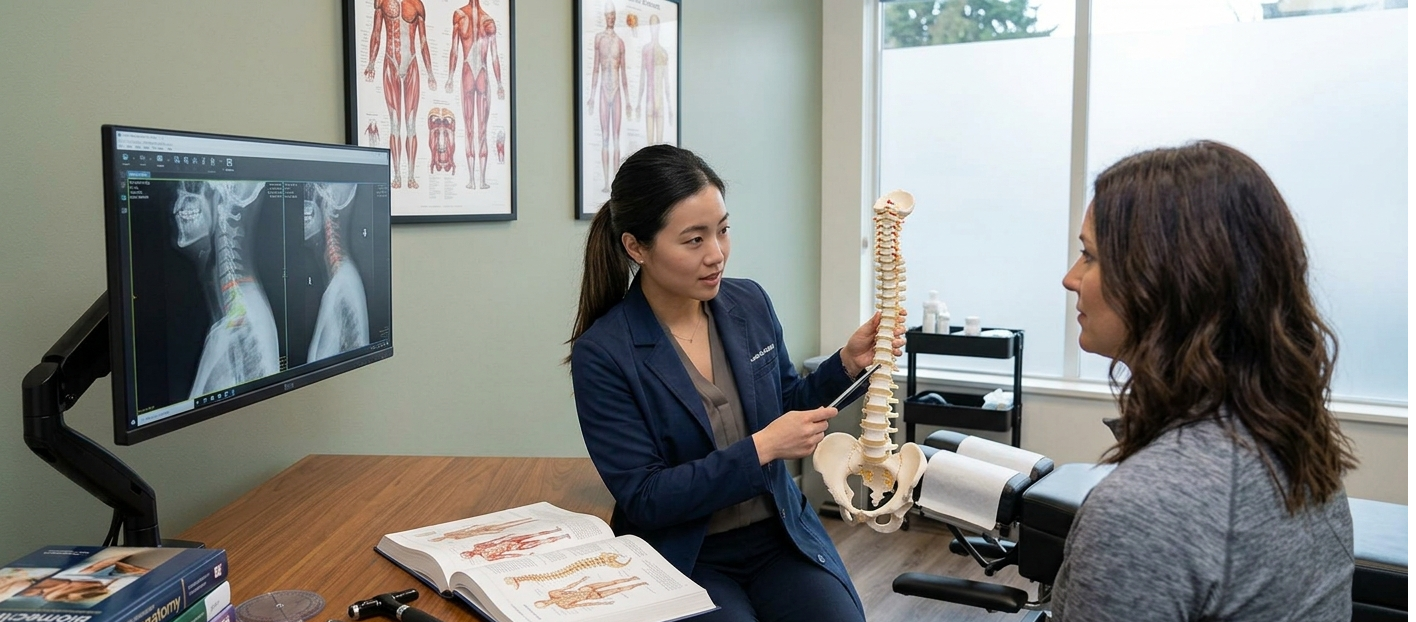
Table of Contents
What Is a Chiropractor?
What Is a Doctor of Chiropractic?
What Degree Does a Chiropractor Have?
Do Chiropractors Go to Medical School?
Chiropractic Education vs. Medical School
Is a Chiropractor a Medical Doctor?
What Is a Medical Doctor?
MD vs. DC: The Big Differences
Are Chiropractors Licensed Healthcare Professionals?
Can Chiropractors Diagnose Medical Conditions?
Can Chiropractors Prescribe Medicine?
How to Become a Chiropractor
Is It Harder to Become a Doctor or a Chiropractor?
Is Chiropractic Care Covered by Insurance?
Frequently Asked Questions
Chiropractic Care at Apex Spine Joint & Wellness
Conclusion
If you have ever wondered, " Do chiropractors go to medical school, the short answer is no. Chiropractors and medical doctors follow different educational and licensing pathways, even though both study many areas of health science and receive extensive clinical training.
A chiropractor earns a Doctor of Chiropractic (DC) degree from a chiropractic college. A physician earns an MD or DO degree from medical school and then completes postgraduate residency training.
That distinction matters because a professional title such as “doctor” does not mean every doctor has the same education, license, or scope of practice.
In this guide, we will explain what a chiropractor is, what a Doctor of Chiropractic degree involves, how chiropractic education compares with medical school, how chiropractors become
licensed, whether they can diagnose conditions or prescribe medicine, and how chiropractic care may be covered by insurance.
What Is a Chiropractor?
A chiropractor is a licensed healthcare professional whose education and scope of practice center on the musculoskeletal system, including the spine, joints, muscles, and related nervous-system structures.
Chiropractors evaluate patients, perform examinations, identify conditions within their legal scope, and provide chiropractic care using approaches such as spinal adjustments, manipulation, rehabilitation, and other conservative techniques permitted by state law.
Patients may seek chiropractic care for concerns involving the back, neck, joints, movement, sports injuries, or other musculoskeletal problems.
The exact services a chiropractor can provide depend on the state in which they practice. Chiropractic is a regulated healthcare profession, and state licensing boards establish requirements for education, examinations, licensure, and professional conduct.
The important point is that what is a chiropractor is not simply someone who performs adjustments. Becoming a chiropractor requires formal doctoral education, clinical training, examinations, and professional licensure.
Do Chiropractors Go to Medical School?
No, chiropractors do not go to medical school.
Instead, they attend chiropractic colleges and complete a Doctor of Chiropractic program.
The University of Bridgeport competitor page correctly identifies this fundamental distinction: chiropractic students earn a DC rather than an MD and follow a different educational pathway.
However, the fact that chiropractors do not attend medical school does not mean their education is informal or that they skip science-based training.
Accredited chiropractic programs include extensive study of anatomy, physiology, pathology, diagnostic procedures, imaging, clinical sciences, and patient care. CCE standards currently require at least 4,200 instructional hours, including at least 1,000 hours in patient-care settings.
The key difference is what the education prepares the professional to do.
Medical school prepares physicians for broad medical practice across many disease systems and specialties. Chiropractic education focuses more heavily on chiropractic practice and the assessment and management of neuromusculoskeletal conditions.
What Degree Does a Chiropractor Have?
If you're asking what degree does a chiropractor have, the answer is a Doctor of Chiropractic (DC) degree.
In the United States, accredited Doctor of Chiropractic programs involve substantial classroom, laboratory, and clinical education. Current Council on Chiropractic Education standards require an accredited Doctor of Chiropractic program to contain at least 4,200 instructional hours, with at least 1,000 hours in a patient-care setting.
What Is a Doctor of Chiropractic Degree?
The curriculum covers much more than spinal adjustments. Depending on the program, chiropractic students study subjects such as:
Anatomy
Physiology
Biochemistry
Microbiology
Pathology
Neuroscience
Biomechanics
Orthopedics
Neurology
Diagnostic imaging
Physical examination
Clinical diagnosis
Chiropractic techniques
Rehabilitation
Nutrition
Patient management
Ethics and professional practice
The NBCE also describes chiropractic education as including basic sciences, clinical sciences, diagnostic training, imaging, clinical decision-making, and hands-on patient care.
This is why the answer to what is a Doctor of Chiropractic degree should not be reduced to “a degree for learning spinal adjustments.” It is a structured professional doctorate with academic and clinical components.
What Is a Doctor of Chiropractic?
A Doctor of Chiropractic (DC) is the professional degree earned by chiropractors after completing an accredited chiropractic education program.
So, what is a Doctor of Chiropractic?
It is a professional doctoral degree focused on chiropractic practice, health sciences, clinical assessment, musculoskeletal conditions, diagnostic skills, and patient care.
The word “doctor” refers to the level of the professional degree. It does not mean that a DC and an MD have identical education or legal authority.
A Doctor of Chiropractic is different from:
MD: Doctor of Medicine
DO: Doctor of Osteopathic Medicine
DDS/DMD: Doctor of Dental Surgery or Doctor of Dental Medicine
PharmD: Doctor of Pharmacy
Each degree prepares professionals for a particular healthcare discipline.
Chiropractic Education vs. Medical School
At first glance, chiropractic education and medical education may appear completely different. In reality, there is some academic overlap.
Both pathways involve extensive study of subjects such as anatomy, physiology, pathology, and other biomedical sciences.
The major differences become clearer when looking at clinical emphasis.
Chiropractic Education
A Doctor of Chiropractic curriculum is designed around chiropractic practice and includes subjects such as:
Musculoskeletal anatomy
Spinal anatomy
Biomechanics
Physical examination
Orthopedic and neurological assessment
Diagnostic imaging
Chiropractic techniques
Rehabilitation
Clinical patient management
Students also complete supervised clinical education.
Medical Education
Medical students receive broad training across many areas of medicine, including:
Internal medicine
Surgery
Pediatrics
Psychiatry
Obstetrics and gynecology
Emergency medicine
Neurology
Cardiology
Infectious disease
Pharmacology
Many other medical specialties
After medical school, MD and DO graduates generally complete residency training before practicing independently in their chosen field.
Therefore, the difference is not simply “more education versus less education.” The programs are designed for different healthcare professions and scopes of practice.
Is a Chiropractor a Medical Doctor?
No. A chiropractor is a doctor by virtue of holding a Doctor of Chiropractic (DC) degree, but a chiropractor is not a medical doctor (MD).
This distinction is important.
A DC and an MD are both licensed healthcare professionals, but they have different degrees, educational pathways, examinations, and legal scopes of practice.
So when someone asks, is a chiropractor a medical doctor, the clearest answer is:
A chiropractor is a doctor of chiropractic, not a medical doctor.
In some jurisdictions, chiropractors may be legally described as “chiropractic physicians.” That terminology does not change the distinction between a DC and an MD or DO.
What Is a Medical Doctor?
A medical doctor, or MD, is a physician who has completed an accredited medical education program and obtained medical licensure.
Medical doctors receive broad training in the diagnosis and treatment of human diseases and conditions. Depending on their specialty and state authorization, physicians may prescribe medications, perform procedures, practice surgery, admit patients to hospitals, and manage complex medical conditions.
The typical physician pathway includes:
Undergraduate education and prerequisite coursework
Medical school
Medical licensing examinations
Residency training
Optional fellowship or additional specialty training
The exact pathway can vary, but medical education is designed to prepare physicians for a broad range of medical practice.
MD vs. DC: The Big Differences
Understanding MD vs. DC: the big differences is easier when the two pathways are viewed side by side.
|
|
|
Professional degree | Doctor of Medicine | Doctor of Chiropractic |
Professional school | Medical school | Chiropractic college |
Main educational focus | Broad medical care and disease management | Chiropractic and neuromusculoskeletal care |
Basic sciences | Extensive | Extensive |
Clinical training | Broad medical clinical rotations | Chiropractic-focused clinical training |
Residency | Generally required for independent specialty practice | Not universally required for entry-level chiropractic practice |
Licensing exams | Medical licensing examinations | NBCE and state-specific requirements |
Prescribing medication | Within medical scope and applicable law | Generally not permitted |
Surgery | Within appropriate medical/surgical scope | Not part of chiropractic practice |
Primary clinical focus | Broad medical conditions | Neuromusculoskeletal conditions and chiropractic care |
Neither degree should be treated as a substitute for the other.
A patient with a musculoskeletal concern may seek chiropractic care, while a patient with a condition requiring medication, surgery, or broader medical management may need an MD or DO. In some situations, different healthcare professionals may work together.
Are Chiropractors Licensed Healthcare Professionals?
Yes. Chiropractors are licensed healthcare professionals.
In the United States, chiropractic practice is regulated by state law. Chiropractors must meet the educational and examination requirements established by the jurisdiction where they practice.
The National Board of Chiropractic Examiners reports that all 50 states either accept or require NBCE Parts I–IV for chiropractic licensure. The exams evaluate areas including basic sciences, clinical sciences, diagnosis, diagnostic imaging, chiropractic practice, and practical clinical skills.
Licensure is important because it establishes the legal boundaries within which a chiropractor can practice.
It also means that the answer to are chiropractors licensed healthcare professionals is clearly yes, while the answer to “are chiropractors medical doctors?” remains no.
These are two separate questions.
Can Chiropractors Diagnose Medical Conditions?
The answer depends on the jurisdiction and the type of condition being evaluated.
Chiropractic education includes training in patient history, physical examination, neuromusculoskeletal examination, diagnostic imaging, clinical reasoning, and diagnosis within the chiropractor's scope of practice. NBCE examinations specifically assess diagnostic and clinical competencies.
However, a chiropractor's legal authority is not unlimited.
For example, Arkansas law defines the practice of chiropractic to include diagnosis and analysis related to the chiropractic scope, including spinal adjustment and related care, while excluding drug-based treatment and surgery from chiropractic practice.
A chiropractor may also identify signs that require medical evaluation and refer a patient to another healthcare professional when a problem falls outside chiropractic scope.
This is an important part of responsible healthcare: diagnosis does not mean every healthcare professional diagnoses every disease. Scope depends on professional training and state law.
Can Chiropractors Prescribe Medicine?
Generally, no.
Chiropractic practice is primarily focused on non-drug approaches, and prescribing authority is determined by state law.
For example, Arkansas law specifically excludes prescribing or administering drugs for internal use from the state's statutory practice of chiropractic.
This is one of the clearest differences between chiropractic and conventional medical practice.
A chiropractor may provide care within the chiropractic scope and may coordinate with another healthcare professional when a patient needs medication or medical treatment outside that scope.
Patients should always check the laws of their state because healthcare scope-of-practice rules can differ by jurisdiction.
How to Become a Chiropractor
If you're researching how to become a chiropractor, the pathway involves several stages.
1. Complete Undergraduate Education
Students typically complete undergraduate coursework before entering chiropractic college. Specific admission requirements vary by institution.
2. Enter an Accredited Chiropractic Program
The student then enrolls in an accredited Doctor of Chiropractic program.
Current CCE standards require at least 4,200 instructional hours and at least 1,000 hours in a patient-care setting for accredited programs.
3. Complete Academic and Clinical Training
Students study basic sciences, clinical sciences, diagnosis, imaging, chiropractic techniques, rehabilitation, and patient management.
Clinical training allows students to apply what they learn while working with patients under supervision.
4. Pass Required Examinations
The NBCE administers Parts I, II, III, and IV examinations covering basic sciences, clinical sciences, clinical competencies, and practical skills. All 50 states either accept or require Parts I–IV for licensure, although individual state requirements vary.
5. Obtain State Licensure
After completing education and the required examinations, graduates apply for a chiropractic license in the state where they intend to practice.
State boards determine the specific requirements.
For example, Arkansas has a State Board of Chiropractic Examiners responsible for licensing and regulating chiropractors in the state.
6. Maintain Professional Licensure
Licensed chiropractors generally must meet continuing education and renewal requirements established by their state.
The entire pathway demonstrates why how to become a chiropractor involves substantial academic preparation, clinical training, examinations, and ongoing professional requirements.
Is It Harder to Become a Doctor or a Chiropractor?
This question is more complicated than it may appear because “doctor” can refer to different professional degrees.
If by “doctor” you mean an MD or DO, medical education generally involves a broader medical curriculum followed by residency training. Chiropractic education follows a different professional curriculum focused on chiropractic practice.
It is therefore more accurate to compare education, training length, clinical requirements, and scope rather than declaring one profession universally “harder.”
A chiropractic student still completes thousands of hours of professional education and clinical training. Current CCE standards require at least 4,200 instructional hours for accredited Doctor of Chiropractic programs.
The important difference is what those hours are designed to prepare the graduate to do.
Is Chiropractic Care Covered by Insurance?
Sometimes. Coverage depends on the insurance company, plan, state, diagnosis, treatment, and specific service being provided.
Medicare
Medicare Part B provides limited chiropractic coverage. CMS states that Medicare coverage is restricted to manual manipulation of the spine to correct a spinal subluxation when the applicable requirements are met. Other services furnished or ordered by chiropractors are not covered under this specific chiropractic benefit.
Private Insurance
Private health plans may include chiropractic benefits, but the details vary. A plan may have requirements involving:
Copays
Deductibles
Visit limits
Prior authorization
In-network providers
Covered versus non-covered services
Medicaid and Other Coverage
Medicaid benefits vary by state, while workers' compensation and auto-related coverage may have separate rules for eligible injuries.
Before starting care, patients should contact their insurance provider or the chiropractic office to confirm current benefits and out-of-pocket costs.
Frequently Asked Questions
Is a Doctor of Chiropractic degree a real doctorate?
Yes. The Doctor of Chiropractic is a professional doctoral degree. Accredited programs require extensive academic and clinical education, and graduates must meet applicable licensing requirements.
Do chiropractors go to medical school?
No. Chiropractors attend chiropractic colleges and earn a Doctor of Chiropractic degree rather than an MD or DO.
Is a chiropractor a medical doctor?
No. A chiropractor is a Doctor of Chiropractic, or DC. An MD is a Doctor of Medicine. They are separate professional degrees with different educational pathways and scopes of practice.
Can chiropractors prescribe medicine?
Generally, no. Prescribing authority depends on state law, and many states do not authorize chiropractors to prescribe medication. Arkansas law, for example, specifically excludes prescribing or administering internally taken drugs from the practice of chiropractic.
Are chiropractors licensed healthcare professionals?
Yes. Chiropractors are licensed and regulated healthcare professionals. Licensing requirements vary by state, and national board examinations are part of the licensure process in every U.S. state.
What degree does a chiropractor have?
A chiropractor earns a Doctor of Chiropractic (DC) degree after completing an accredited chiropractic education program and meeting applicable licensing requirements.
Chiropractic Care at Apex Spine Joint & Wellness
If you are looking for chiropractic care in Fayetteville, Arkansas, Apex Spine Joint & Wellness provides chiropractic services focused on personalized patient care and functional health.
The clinic offers several services designed to address different patient needs, including:
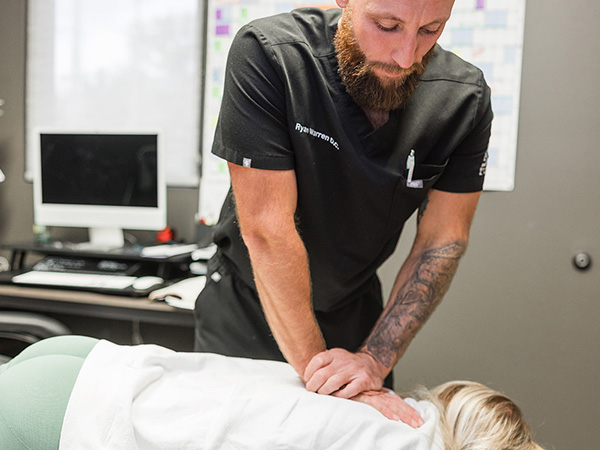
The clinic is led by Dr. Ryan Warren, owner of Apex Spine Joint & Wellness. His approach combines chiropractic care with rehabilitation and performance-focused treatment. According to the clinic's published information, Dr. Warren has experience working with professional athletes, including Olympians, UFC fighters, and professional boxers.
For patients in Fayetteville who are exploring chiropractic care, a consultation can help determine whether chiropractic treatment is appropriate for their individual needs and whether additional healthcare services or referrals may be necessary.
Apex Spine Joint & Wellness
Location: Fayetteville, AR
Phone: +1 479-443-0800
Website: Chiropractor in Fayetteville, AR
Map: Apex Spine Joint & Wellness – Fayetteville, AR
Conclusion
So, do chiropractors go to medical school? No. Chiropractors complete a separate professional education pathway and earn a Doctor of Chiropractic (DC) degree.
That does not make chiropractic education informal. Accredited programs require thousands of hours of academic and clinical instruction, including training in anatomy, physiology, pathology, diagnosis, imaging, clinical sciences, and patient care.
The major distinction is scope. Medical doctors receive broad training for medical diagnosis and treatment, while chiropractors receive specialized education centered on chiropractic practice and neuromusculoskeletal care.
Understanding the difference between an MD and a DC can help patients choose the appropriate healthcare professional for their individual needs and recognize when coordinated care may be appropriate.
Author Bio
Dr. Ryan Warren is the owner of Apex Spine Joint & Wellness in Fayetteville, Arkansas, where he leads a results-driven approach to chiropractic care. Known for combining advanced chiropractic techniques with modern rehabilitation and performance-based therapy, Dr. Warren works with patients from a wide range of backgrounds, including athletes and active individuals.
With experience treating professional athletes, including Olympians, UFC fighters, and professional boxers, Dr. Warren focuses on restoring mobility, supporting recovery, and helping patients improve physical function. His patient-centered philosophy emphasizes personalized care, injury prevention, long-term wellness, and individualized health goals.


Contact Us
Hours of Operation
- Monday 8:30am - 12:30pm | 3:00pm - 6:00pm
- Tuesday 8:30am - 12:30pm | 3:00pm - 6:00pm
- Wednesday 8:30am - 12:30pm | 3:00pm - 6:00pm
- Thursday 8:30am - 12:30pm | 3:00pm - 6:00pm
- Friday 8:30am - 12:30pm
- Saturday Closed
- Sunday Closed

© 2026 Apex Spine Joint & Wellness. All rights Reserved. Accessibility Statement - Privacy Policy - Sitemap
Powered by:
