

What Does a Herniated Disc Feel Like? Symptoms & Treatment
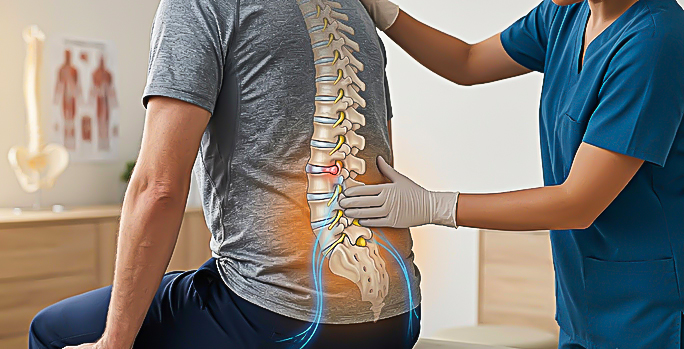
Table of Contents
What Is a Herniated Disc?
What Does a Herniated Disc Feel Like?
Herniated Disc Symptoms
Herniated Disc Symptoms in the Lower Back
Herniated Disc Symptoms in the Neck
When Herniated Disc Symptoms Need Urgent Care
Causes of a Herniated Disc
What Does a Herniated Disc Look Like?
Bulging Disc vs Herniated Disc
Is a Slipped Disc the Same as a Herniated Disc?
How Is a Herniated Disc Diagnosed?
What Is the Treatment for a Herniated Disc?
Will a Herniated Disc Heal on Its Own?
How to Relieve Herniated Disc Pain in the Lower Back
Surgery for a Herniated Disc
Herniated Disc Care in Fayetteville, AR
Frequently Asked Questions
Final Thoughts
About the Author
If you have sharp back pain that shoots into your leg, unexplained tingling or numbness, or pain that becomes worse with certain movements, you may wonder: what does a herniated disc feel like?
A herniated disc does not feel the same for everyone. Some people have no symptoms at all. When a herniated disc irritates or presses on a nearby nerve, however, it can cause sharp or burning pain, numbness, tingling, or muscle weakness. In the lower back, the pain may travel through the buttock and down the leg. A herniated disc in the neck may send pain into the shoulder, arm, or hand.
This guide explains what is a herniated disc, the symptoms it may cause, why it develops, how it differs from a bulging disc, how it is diagnosed, and what is the treatment for a herniated disc.
What Is a Herniated Disc?
To understand what is a herniated disc, it helps to understand the basic structure of a spinal disc.
The bones of the spine, called vertebrae, are separated by intervertebral discs that help absorb forces and allow movement. Each disc has a softer center, called the nucleus, surrounded by a tougher outer layer called the annulus.
A herniated disc occurs when disc material moves beyond its normal boundary. In many cases, part of the softer center pushes through a weakened or damaged area of the outer disc.
A herniated disc can occur anywhere in the spine, but it is especially common in the lower back. Some herniated discs cause no symptoms. Problems are more likely when displaced disc material irritates or compresses a nearby nerve.
In simple terms, a herniated disc is not a disc that has literally “slipped” out from between the vertebrae. It is a change in which part of the disc extends beyond its usual position.
What Does a Herniated Disc Feel Like?
So, what does a herniated disc feel like in everyday life?
The sensation depends on the location of the disc and whether a nearby nerve is affected. You may feel little or no back pain but have significant pain somewhere else along the affected nerve.
Common sensations include:
Sharp or shooting pain
Burning pain
A deep ache in the back or neck
Pain traveling into an arm or leg
Pins and needles
Numbness
Muscle weakness
Pain triggered or aggravated by certain movements
For a lumbar herniated disc, pain may begin around the lower back or buttock and travel through the thigh, calf, or foot. This type of radiating nerve pain is commonly called sciatica.
A cervical herniated disc may cause symptoms around the neck, shoulder, arm, hand, or fingers.
Coughing, sneezing, laughing, or moving into certain positions may increase symptoms in some people because those actions can temporarily change pressure around an irritated nerve.
Can You Have a Herniated Disc Without Back Pain?
Yes.
An important point is that the appearance of a disc on a scan does not always match how a person feels. Some people have herniated discs visible on imaging but experience no pain or neurological symptoms.
That is why healthcare professionals interpret imaging together with your symptoms, medical history, strength, sensation, reflexes, and physical examination rather than treating an MRI finding by itself.
Herniated Disc Symptoms
Herniated disc symptoms depend largely on which part of the spine is affected and which nerve, if any, is irritated.
The most common symptoms fall into four categories.
1. Local Pain
You may experience aching or soreness around the affected area of the neck or lower back.
2. Radiating Pain
Nerve irritation may cause pain that travels away from the spine.
For example:
A lumbar disc problem may send pain through the buttock and leg.
A cervical disc problem may send pain into the shoulder and arm.
3. Numbness or Tingling
You may notice pins and needles, reduced sensation, or an “asleep” feeling in the part of the body supplied by the affected nerve.
4. Muscle Weakness
If nerve function is significantly affected, muscles supplied by that nerve may become weaker. You may notice difficulty lifting an object, gripping with the hand, lifting the foot, or walking normally.
Herniated Disc Symptoms Lower Back
Because lumbar disc herniations are common, many people searching for herniated disc symptoms lower back are actually experiencing symptoms in both the back and leg.
Possible symptoms include:
Lower back pain
Pain in the buttock
Sharp or burning pain traveling down one leg
Pain extending into the thigh or calf
Tingling or numbness in the leg or foot
Weakness in certain leg or foot muscles
Difficulty walking normally in more significant cases
Pain caused by an irritated lumbar nerve root may be more noticeable in the leg than in the lower back itself.
Which part of the leg is affected depends partly on the location of the involved nerve. For example, one person may feel symptoms around the outer leg while another notices symptoms farther down toward the foot.
Mayo Clinic notes that lumbar herniated discs can produce pain in the lower back, buttocks, thigh, calf, and sometimes the foot.
Does Every Lumbar Herniated Disc Cause Sciatica?
No.
Sciatica describes symptoms caused by irritation of nerve roots that contribute to the sciatic nerve. A lumbar herniation can cause sciatica, but some herniated discs remain painless or produce mainly localized discomfort.
That distinction is important because lower back pain alone does not prove that a disc is herniated.
Herniated Disc Symptoms in the Neck
A cervical herniated disc affects the neck region of the spine.
Symptoms may include:
Neck pain
Pain around the shoulder blade
Shoulder pain
Sharp or burning pain traveling down the arm
Tingling or numbness in the arm, hand, or fingers
Weakness in the arm or hand
Symptoms often follow the pathway of the affected nerve rather than remaining directly over the damaged disc.
When Herniated Disc Symptoms Need Urgent Care
Most herniated discs are not medical emergencies, but certain symptoms require immediate evaluation.
Seek urgent medical attention for:
New loss of bladder control
New loss of bowel control
Difficulty urinating despite feeling that the bladder is full
Loss of sensation around the groin, buttocks, inner thighs, or genital area
Rapidly worsening leg weakness
Severe neurological symptoms that are getting worse
These symptoms can occur with severe compression of the nerve roots at the bottom of the spinal canal, known as cauda equina syndrome. Although uncommon, it can require emergency treatment to reduce the risk of lasting neurological problems.
Do not wait for a routine chiropractic or rehabilitation appointment if these warning signs occur.
Causes of a Herniated Disc
The causes of a herniated disc are not always tied to a single injury.
For many people, the condition develops gradually as the discs change with age.
Age-Related Disc Degeneration
Spinal discs naturally become less flexible over time. These changes can make the outer disc more vulnerable to injury or displacement during normal activities.
Age-related wear is one of the most common factors associated with disc herniation.
Lifting and Twisting
Lifting a heavy object while bending or twisting may place additional stress on the lower back.
Using the back rather than the legs when lifting can also contribute to injury, although many people with a herniated disc cannot identify one specific event that caused it.
Physically Demanding Work
Frequent lifting, pulling, pushing, twisting, and bending may increase the likelihood of disc problems over time.
Body Weight
Additional body weight can increase mechanical stress on the lumbar spine.
Genetics
Some people appear to have a greater inherited tendency to develop disc problems.
Smoking
Smoking has also been associated with disc degeneration and is considered a risk factor for herniated discs.
Trauma
Less commonly, a significant fall, collision, or other traumatic injury may contribute to acute disc herniation.
It is better to think of the causes of a herniated disc as a combination of disc health, age, physical loading, individual risk factors, and sometimes injury rather than assuming every case happened because of one wrong movement.
What Does a Herniated Disc Look Like?
If you are wondering what does a herniated disc look like, the answer is easiest to understand through spinal imaging.
MRI can show the discs, nerves, spinal canal, and surrounding soft tissues in much greater detail than a standard X-ray.
A herniated disc appears as a localized area of disc material extending beyond its normal space.
Specialists may describe the shape as a:
Disc Protrusion
A protrusion is a type of localized disc herniation in which the displaced portion remains relatively broad at its connection with the parent disc.
Disc Extrusion
An extrusion occurs when the displaced disc material extends farther outward relative to the width of its connection with the original disc.
Disc Sequestration
A sequestration occurs when a portion of extruded disc material completely loses continuity with the original disc.
These definitions are based primarily on the shape and relationship of the displaced disc material on imaging. They do not, by themselves, determine how much pain a patient should have or whether surgery is needed.
Can an X-Ray Show a Herniated Disc?
A standard X-ray does not directly show a herniated disc.
X-rays may still be useful when a healthcare professional needs to evaluate bones, alignment, fractures, or other possible causes of symptoms. MRI or, in some circumstances, CT imaging provides more information about the discs themselves.
So when asking what does a herniated disc look like, remember that imaging is only one part of the diagnosis. The scan must be interpreted in the context of what the patient is actually experiencing.
Bulging Disc vs Herniated Disc: What Is the Difference?
The differences between a bulging disc vs herniated disc can be confusing because the terms are often used loosely in everyday conversation.
What Is a Bulging Disc?
A disc bulge describes a broader extension of the outer margin of the disc beyond its normal boundary.
According to standardized lumbar disc terminology developed by spine and radiology societies, a bulging disc generally involves more than 25% of the disc circumference. A localized displacement involving a smaller portion of the disc is categorized as a herniation.
A bulging disc is therefore not simply an “early-stage herniated disc,” and a bulge does not automatically mean that a nerve is compressed.
Differences Between a Bulging Disc vs Herniated Disc
Factor | Bulging Disc | Herniated Disc |
Pattern | Broader extension of the disc margin | More localized displacement of disc material |
Area involved | Generally more than 25% of the circumference | Generally less than 25% |
Common imaging terms | Bulge, asymmetric bulge | Protrusion, extrusion, sequestration |
Symptoms | May cause symptoms or none | May cause symptoms or none |
Nerve irritation | Possible | Possible and often more likely when displaced material affects a nerve |
A herniated disc may be more likely than a broad bulge to irritate a nerve root, but neither finding guarantees pain. Mayo Clinic notes that people can have either abnormality on imaging without experiencing symptoms.
Understanding what is a bulging disc is useful when reading an MRI report, but treatment decisions should be based on the whole clinical picture rather than the wording of one imaging finding.
Is a Slipped Disc the Same as a Herniated Disc?
Many people ask, is a slipped disc the same as a herniated disc?
In everyday language, yes. “Slipped disc” is commonly used to describe a herniated disc.
However, the term is misleading because the entire disc does not literally slip out from between the vertebrae. Instead, part of the disc material moves outside its normal boundary.
Other terms you may encounter include:
Ruptured disc
Prolapsed disc
Disc protrusion
Disc extrusion
These terms are not always perfectly interchangeable in medical imaging terminology, but “slipped disc” and “herniated disc” are commonly used to refer to the same general problem.
How Is a Herniated Disc Diagnosed?
A healthcare professional usually starts by asking about:
Where the pain began
Where the pain travels
What makes it better or worse
Numbness or tingling
Changes in strength
Recent injuries or lifting
Changes in bladder or bowel function
The right exercise depends on the individual. An exercise that helps one person may worsen another person's symptoms.
Chiropractic Care
Chiropractic care may be considered as part of conservative management for some patients with back pain and related musculoskeletal symptoms after an appropriate evaluation.
A herniated disc should not automatically be treated with the same technique in every patient. The chiropractor should consider neurological findings, imaging when clinically appropriate, symptom severity, medical history, and whether there are contraindications or signs requiring medical referral.
Non-Surgical Spinal Decompression
Some chiropractic and rehabilitation practices use motorized spinal decompression as a conservative treatment option for selected patients with disc-related symptoms.
The treatment uses controlled traction to alter loading on the spine. However, it should not be described as physically “pulling a herniated disc back into place,” and results vary among patients.
A clinical evaluation is important before determining whether decompression is appropriate.
Apex Spine Joint & Wellness currently lists spinal decompression and herniated-disc care among its services and conditions in Fayetteville, Arkansas.
Epidural Steroid Injections
For persistent nerve-related pain, a physician may consider an epidural steroid injection.
The goal is primarily to reduce inflammation and pain around the affected nerve. It does not physically repair the damaged disc, and the degree and duration of relief vary.
Ultimately, what is the treatment for a herniated disc should be decided after determining whether the symptoms actually match the disc abnormality and whether any neurological deficit is present.
Will a Herniated Disc Heal on Its Own?
A common question is: will a herniated disc heal on its own?
Many people improve without surgery.
Symptoms can settle as inflammation decreases, nerve irritation improves, and the body adapts. Herniated lumbar disc material can also shrink or be partially resorbed over time.
A 2024 meta-analysis involving 31 studies and 2,233 conservatively treated patients found imaging evidence of disc resorption in about 70% overall, with resorption occurring more often in extruded and sequestered herniations than in contained bulges. Much of the resorption observed in the studies occurred within six months.
A separate 2024 systematic review reported spontaneous resorption in approximately 76.6% of patients included across the studies it analyzed, while also noting substantial variation among studies and herniation types.
That does not mean every herniated disc will disappear, nor does a change on MRI always perfectly match symptom improvement.
So, will a herniated disc heal on its own? It may improve substantially without surgery, and the displaced material may shrink in some cases. The appropriate approach depends on symptoms, neurological function, the type of herniation, and how the condition progresses.
How to Relieve Herniated Disc Pain in Lower Back
When learning how to relieve herniated disc pain in lower back, the goal is usually to control symptoms while maintaining safe movement and protecting irritated nerves.
1. Avoid Activities That Clearly Trigger Radiating Pain
Heavy lifting, repeated bending, and forceful twisting may aggravate symptoms during an acute episode.
Modify those activities temporarily rather than repeatedly pushing through severe pain.
2. Keep Moving Within Tolerance
Short periods of comfortable walking or other light movement can help prevent unnecessary stiffness.
Movement should be adjusted if it causes worsening radiating pain, numbness, or weakness.
3. Use Comfortable Positions
Some people feel better with a pillow under the knees while lying on the back or between the knees while lying on the side.
There is no single ideal sleeping position for every herniated disc, so use the position that reduces symptoms.
4. Change Sitting Positions Regularly
Long periods in the same position can aggravate symptoms for some people.
Changing position and taking regular movement breaks may make sitting more manageable.
5. Use Heat or Cold Based on Comfort
Cold or heat may temporarily reduce discomfort for some people. Neither method repairs the disc itself, but they may make an acute episode easier to manage.
6. Follow an Individualized Exercise Program
That does not necessarily mean complete bed rest. Appropriate movement and a gradual return to activity are commonly part of conservative management.
Pain Medication
Depending on a patient's health history and other medications, a medical professional may recommend or prescribe medicines for pain or inflammation.
Medication should be used according to professional guidance, particularly for people with kidney disease, gastrointestinal problems, cardiovascular conditions, medication interactions, or other medical concerns.
Physical Therapy and Exercise
Physical therapy may include exercises and movement strategies designed to:
- Improve mobility
- Strengthen supportive muscles
- Restore function
- Reduce positions or movements that aggravate symptoms
Many cases can be assessed initially through medical history and physical examination. Imaging may be appropriate when the diagnosis is uncertain, symptoms are severe or persistent, neurological deficits are present, or the result would change treatment decisions.
What About the Straight Leg Raise Test?
For suspected lumbar nerve-root irritation, a healthcare professional may perform a straight leg raise test.
During the test, the patient lies on their back while the examiner raises the straightened leg. Reproduction of characteristic radiating leg symptoms may support the presence of nerve-root irritation.
It should not be treated as a reliable DIY diagnosis. Many conditions can produce lower back or leg pain, so test results need to be interpreted alongside the rest of the examination.
What Is the Treatment for a Herniated Disc?
If you are asking what is the treatment for a herniated disc, the answer depends on the severity of your symptoms, neurological findings, daily limitations, overall health, and how symptoms change over time.
Most people do not immediately need surgery. Conservative treatment is usually considered first when serious neurological warning signs are absent.
Activity Modification
Avoiding activities that clearly aggravate symptoms may be useful during the painful stage.
The physical examination may include checking:- Reflexes
- Muscle strength
- Sensation
- Walking
- Leg or arm movements
- Positions that reproduce symptoms
Certain extension-based movements are helpful for some patients but inappropriate for others.
Instead of assuming one exercise works for every disc herniation, use movements selected according to your symptoms and examination findings.
Get Evaluated if Symptoms Persist
Professional assessment becomes particularly important when pain continues, travels into an arm or leg, affects sleep or daily activity, or occurs with numbness or weakness.
The safest approach to how to relieve herniated disc pain in lower back is therefore not simply to find one stretch or home remedy. It is to identify which movements and treatments match your particular symptoms.
Surgery for a Herniated Disc
Most patients do not need surgery for a herniated disc, but surgery becomes important in selected cases.
A healthcare professional may consider surgery when there is:
- Significant or progressive muscle weakness
- Persistent disabling nerve pain despite appropriate conservative treatment
- Difficulty walking or standing because of neurological symptoms
- Loss of bladder or bowel control
- Other evidence of serious nerve compression
Apex specifically lists herniated discs and spinal decompression among the conditions and services addressed by the practice.
Not every service is appropriate for every herniated disc. For example, SoftWave Therapy is primarily an acoustic-wave treatment used for selected musculoskeletal and soft-tissue concerns and should not automatically be considered a treatment for the herniated disc itself. The appropriate care plan should be based on an evaluation rather than on the name of the condition alone.
If your symptoms suggest serious nerve compression, progressive weakness, or cauda equina syndrome, emergency or specialist medical care may be necessary instead of routine conservative treatment.
Start With a Professional Evaluation
If lower back or leg pain is affecting your movement, work, exercise, or everyday life, an assessment can help determine whether a herniated disc, another spinal condition, or a different source of pain may be contributing.
Mayo Clinic notes that surgery may be considered when symptoms do not improve after a period of conservative care or when significant neurological problems are present.
Diskectomy or Microdiscectomy
One common operation removes the portion of herniated disc material pressing on a nerve.
The procedure may be described as a diskectomy or, depending on the surgical technique, a microdiscectomy.
Other Procedures
Depending on the location of the disc, spinal stability, anatomy, and other findings, surgical treatment may sometimes involve additional decompression, fusion, or artificial disc replacement.
These procedures are not interchangeable, and they are not required simply because an MRI shows a herniated disc.
Is Surgery Always Better Than Conservative Care?
No.
For patients without emergency neurological findings, treatment decisions depend on symptom severity, duration, function, response to conservative treatment, examination findings, imaging, and personal goals.
Because many patients improve without an operation, surgery for a herniated disc is usually considered based on individual clinical circumstances rather than imaging alone.
Herniated Disc Care in Fayetteville, AR
Persistent back pain, sciatica, numbness, or mobility problems deserve more than guesswork.
At Apex Spine Joint & Wellness in Fayetteville, Arkansas, Dr. Ryan Warren and the clinic team provide conservative musculoskeletal care tailored to the patient's symptoms, examination findings, and functional goals.
The clinic currently offers:
Apex Spine Joint & Wellness
Fayetteville, AR
Phone: +1 479-443-0800
Website: Chiropractor in Fayetteville, AR
Map: Apex Spine Joint & Wellness – Fayetteville, AR
Frequently Asked Questions About Herniated Discs
How do I know if I herniated a disc?
Possible signs include sharp or burning pain traveling into an arm or leg, numbness, tingling, or weakness. However, muscle strains, joint problems, spinal stenosis, hip conditions, and other disorders can cause similar symptoms.
A diagnosis is based on your medical history and physical examination, with imaging used when appropriate.
Can a herniated disc cause pain without back pain?
Yes.
A lumbar herniated disc can irritate a nerve and cause mainly buttock or leg symptoms, while a cervical disc can produce shoulder or arm symptoms.
Some people also have herniated discs without any symptoms.
Is a slipped disc the same as a herniated disc?
In common language, yes. “Slipped disc” is an informal term generally used for a herniated disc. The disc itself does not literally slip out of the spine.
Will a herniated disc heal on its own?
Many people improve without surgery, and research shows that some lumbar herniations shrink or resorb over time. The likelihood differs by the type of herniation, and improvement should not be assumed when neurological symptoms are worsening.
How long does a herniated disc take to feel better?
Recovery varies. Some patients improve within several days or weeks with conservative care, while nerve symptoms can take longer to settle. Imaging changes such as resorption may continue over several months.
What can a herniated disc be mistaken for?
Conditions with overlapping symptoms may include muscle or ligament injuries, spinal stenosis, hip conditions, peripheral nerve problems, sacroiliac-region pain, and other causes of back or leg pain.
This is why symptoms should be assessed rather than assuming every episode of sciatica or lower back pain comes from a herniated disc.
Can you test yourself for a herniated disc?
There is no reliable home test that confirms a herniated disc.
Tests such as the straight leg raise can provide useful clinical information, but they should be interpreted by a qualified healthcare professional in combination with strength, sensation, reflexes, symptoms, and medical history.
Does an MRI automatically mean I need treatment?
No.
Imaging abnormalities can exist without symptoms. Treatment should address the person and their clinical findings rather than an MRI result alone.
When should I worry about a herniated disc?
Seek prompt medical evaluation for new or worsening weakness. Seek emergency care for loss of bladder or bowel control, difficulty urinating, or numbness around the groin or saddle region.
Final Thoughts
So, what does a herniated disc feel like?
For some people, it feels like localized back or neck pain. For others, the most noticeable symptom is sharp or burning pain traveling into an arm or leg, along with tingling, numbness, or weakness. And some people have a herniated disc without feeling anything at all.
The important question is not simply whether a disc looks abnormal on an MRI. It is whether that finding matches your symptoms, neurological examination, and daily limitations.
Many herniated discs can be managed without surgery, and some shrink naturally over time. However, worsening weakness, bladder or bowel changes, or saddle numbness require urgent medical attention.
If you are experiencing persistent back pain, sciatica, numbness, or movement limitations in Fayetteville, AR, Apex Spine Joint & Wellness can evaluate your symptoms and discuss whether conservative services available at the clinic are appropriate for your situation.
About the Author
Dr. Ryan Warren, D.C.
Dr. Ryan Warren is the owner of Apex Spine Joint & Wellness in Fayetteville, Arkansas, where he combines chiropractic care with rehabilitation and performance-focused approaches.
Dr. Warren works with a broad range of patients, from everyday adults and active individuals to professional athletes. His clinic biography notes experience working with track athletes, Olympians, UFC competitors, and professional boxers. His approach emphasizes individualized care, mobility, physical function, rehabilitation, and long-term wellness.

Contact Us
Hours of Operation
- Monday 8:30am - 12:30pm | 3:00pm - 6:00pm
- Tuesday 8:30am - 12:30pm | 3:00pm - 6:00pm
- Wednesday 8:30am - 12:30pm | 3:00pm - 6:00pm
- Thursday 8:30am - 12:30pm | 3:00pm - 6:00pm
- Friday 8:30am - 12:30pm
- Saturday Closed
- Sunday Closed

© 2026 Apex Spine Joint & Wellness. All rights Reserved. Accessibility Statement - Privacy Policy - Sitemap
Powered by:
