

What Is Plantar Fasciitis?
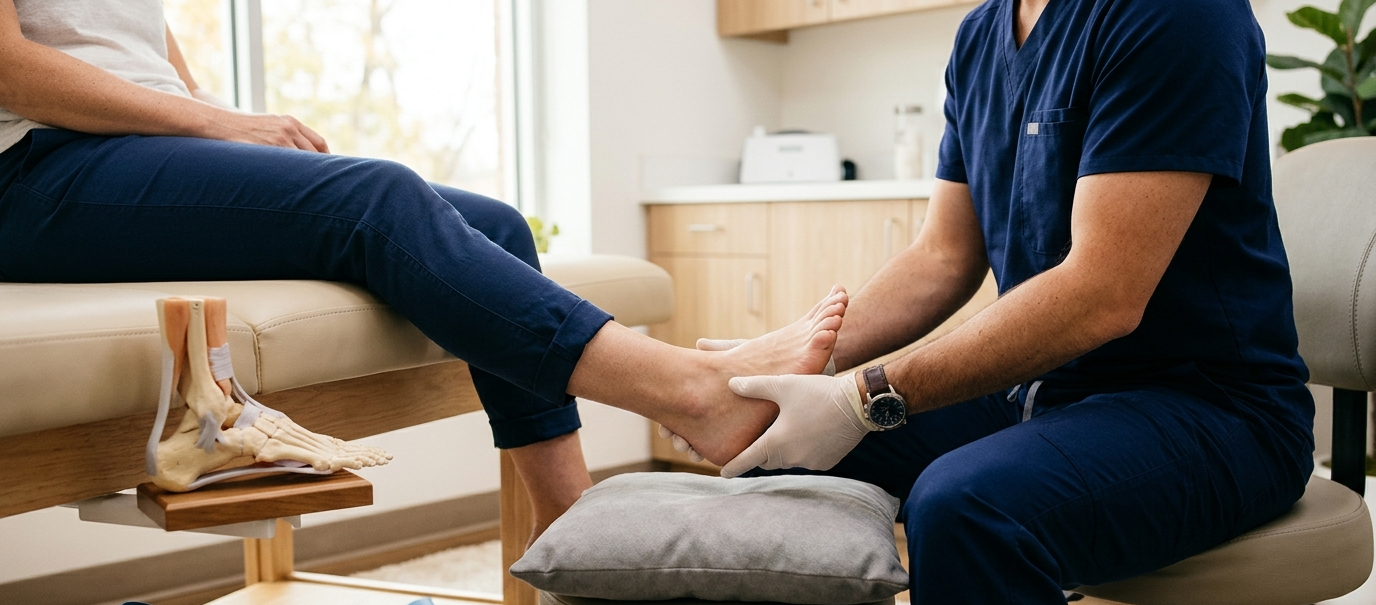
What Is Plantar Fasciitis? Symptoms, Causes, and Treatment Options
Table of Contents
Do you feel a sharp pain in your heel when you take your first steps in the morning? Does the pain improve after walking for a few minutes but return after sitting or standing for a long time?
These are common signs of plantar fasciitis, a condition that affects the thick band of tissue along the bottom of your foot.
Plantar fasciitis happens when the plantar fascia becomes irritated from repeated stress. It is one of the most common causes of heel pain and can make everyday activities like walking, working, and exercising uncomfortable.
The good news is that most people improve with nonsurgical treatment, including stretching, supportive footwear, exercise, and activity changes.
In this guide, you'll learn what plantar fasciitis is, what causes it, where the pain occurs, how long recovery takes, and which treatments may help. We'll also explain when chiropractic care and SoftWave Therapy may be considered.
What Is Plantar Fasciitis?
Plantar fasciitis is a painful condition that affects the plantar fascia, a strong band of tissue that runs along the bottom of your foot, connecting your heel bone to your toes.
The plantar fascia helps support the arch of your foot and manage the pressure placed on your feet when you stand, walk, or run.
When this tissue experiences more stress than it can handle, it can become irritated and painful. Over time, repeated stress may lead to changes in the tissue, especially near its attachment to the heel bone.
Although the name plantar fasciitis suggests inflammation, long-lasting cases often involve changes in the tissue's structure rather than inflammation alone. Healthcare professionals sometimes use the term plantar fasciopathy to describe this condition.
How Common Is Plantar Fasciitis?
Plantar fasciitis is one of the leading causes of heel pain in adults. It is particularly common among middle-aged adults, runners, people who spend long hours standing, and individuals with certain foot or ankle movement limitations.
However, plantar fasciitis can affect people of different ages and activity levels. You do not need to be an athlete to develop it.
People who suddenly increase their walking or running activity may also experience symptoms because their feet have not had enough time to adapt to the additional stress.
What Are the Symptoms of Plantar Fasciitis?
The most recognizable symptom of plantar fasciitis is pain underneath the heel, especially when taking the first few steps after waking up or sitting for an extended period.
Common symptoms include:
Sharp or stabbing pain at the bottom of the heel.
Heel stiffness when getting out of bed.
Pain that improves after walking briefly.
Discomfort after prolonged standing or walking.
Pain after running or exercising.
Tenderness near the inner underside of the heel.
Occasional discomfort extending into the arch.
Symptoms may affect one foot or both feet, although the severity can differ.
What Does Plantar Fasciitis Feel Like?
Plantar fasciitis often feels like a sharp, stabbing pain underneath the heel. Some people describe it as stepping on a small stone or having a deep bruise at the bottom of the foot.
The pain may be intense during the first steps in the morning and gradually become a dull ache as the foot warms up.
Is plantar fasciitis painful? Yes. The discomfort can range from mild tenderness to severe pain that makes walking or standing difficult.
The intensity of the pain does not always indicate how much tissue damage is present.
Where Does Plantar Fasciitis Hurt?
Plantar fasciitis usually causes pain on the bottom of the heel, particularly near the inner side where the plantar fascia attaches to the heel bone.
Some people also experience discomfort along the arch.
Pain location
Bottom of the heel
Inner underside of the heel
Arch of the foot
Back of the heel
Ankle
What it may indicate
The most typical location for plantar fasciitis
Common area of tenderness near the fascia attachment
Pain may extend along the plantar fascia
May suggest Achilles tendon problems rather than plantar fasciitis
May involve another condition or changes in walking mechanics
Pain location alone cannot confirm a diagnosis. Several other conditions can cause similar symptoms.
Can Plantar Fasciitis Cause Ankle Pain?
Plantar fasciitis primarily affects the heel and arch, not the ankle itself.
However, someone experiencing heel pain may change how they walk to avoid putting pressure on the painful area. These changes can sometimes contribute to discomfort around the ankle.
Limited ankle flexibility or tight calf muscles may also occur alongside plantar fasciitis.
If you experience persistent ankle pain, swelling, numbness, tingling, or burning sensations, a healthcare professional should evaluate the symptoms rather than assuming plantar fasciitis is responsible.
Why Is Plantar Fasciitis Worse in the Morning?
During sleep, your feet are usually relaxed, and the plantar fascia is not being loaded in the same way as when you walk.
When you stand after several hours of rest, the tissue is suddenly placed under tension again. This can trigger the familiar sharp heel pain.
After walking for a few minutes, the pain may decrease as the foot begins moving and adapting to the load.
However, feeling better after walking does not necessarily mean the underlying condition has healed.
What Causes Plantar Fasciitis?
Plantar fasciitis generally develops when repeated stress on the plantar fascia exceeds the tissue's ability to tolerate and recover from that stress.
There is rarely one single cause. Several factors may contribute to the condition.
Common Causes and Risk Factors
1. Tight calf muscles
Limited ankle flexibility, often associated with calf tightness, can change how the foot moves during walking and running. Reduced ankle dorsiflexion is a recognized factor associated with plantar fasciitis.
2. Prolonged standing
People who spend many hours standing or walking, particularly on hard surfaces, may experience greater repetitive loading of their feet.
3. Sudden increases in physical activity
Starting a new running program, increasing walking distance, or rapidly changing workout intensity may place more stress on the plantar fascia than it is accustomed to handling.
4. Excess body weight
Higher body weight can increase the load placed on the feet during weight-bearing activities and is associated with plantar fasciitis in some populations.
5. Foot structure and movement
Flat feet, high arches, and differences in foot movement may influence how pressure is distributed. However, foot shape alone does not determine whether someone will develop plantar fasciitis.
6. Unsupportive or worn-out footwear
Shoes that do not provide adequate comfort or support for a person's activity may contribute to symptoms. The most appropriate footwear depends on individual foot mechanics and comfort.
7. Age-related changes
Plantar fasciitis is commonly seen in middle-aged adults, although younger and older people can also develop it.
Are Heel Spurs the Same as Plantar Fasciitis?
No. Heel spurs and plantar fasciitis are different conditions, although they can occur together.
A heel spur is a bony growth that develops on the heel bone. Plantar fasciitis involves pain and changes affecting the plantar fascia.
Many people have heel spurs without experiencing pain. Finding a heel spur on an X-ray does not automatically mean it is responsible for someone's symptoms.
Plantar Fasciitis vs. Other Causes of Heel Pain
Not every case of heel pain is caused by plantar fasciitis. Understanding the differences can help you recognize when further evaluation is necessary.
Condition
Plantar fasciitis
Achilles tendinopathy
Heel stress fracture
Tarsal tunnel syndrome
Heel fat-pad syndrome
Plantar fascia tear
Typical symptoms
Pain under the heel, especially with the first steps after rest
Pain and stiffness at the back of the heel or along the Achilles tendon
Heel pain that may worsen with weight-bearing activity and become persistent
Burning, tingling, numbness, or nerve-related pain in the foot
Deep, bruise-like pain directly beneath the center of the heel
Sudden pain, sometimes accompanied by a popping sensation, swelling, or bruising
These conditions can overlap, so symptoms alone may not identify the exact cause.
How Is Plantar Fasciitis Diagnosed?
Plantar fasciitis is usually diagnosed through a medical history and physical examination.
A healthcare professional may ask when the pain started, which activities make it worse, whether it improves after walking, and how it affects your daily routine.
During the examination, the provider may assess:
Tenderness underneath the heel.
Ankle and calf flexibility.
Foot movement and arch structure.
Walking patterns.
Symptoms reproduced by gently stretching the plantar fascia.
Signs suggesting nerve problems or other causes of heel pain.
One examination technique is the windlass test, which involves bending the big toe upward to place tension on the plantar fascia.
Are X-Rays or MRI Scans Necessary?
Most people with typical plantar fasciitis symptoms do not need imaging immediately.
However, imaging may be useful when the diagnosis is unclear, symptoms are unusual, or pain continues despite appropriate treatment.
An X-ray may help identify certain bone problems, including fractures. Ultrasound can assess plantar fascia thickness and structure. MRI may be considered when a clinician suspects another condition or a more complex injury.
What Is the Best Treatment for Plantar Fasciitis?
The best treatment for plantar fasciitis usually involves a combination of strategies rather than one single procedure.
According to the 2023 heel pain–plantar fasciitis clinical practice guideline, treatments such as plantar fascia stretching, calf stretching, appropriate manual therapy, taping, and progressive strengthening can play important roles in care.
Treatment should be based on your symptoms, activity level, examination findings, and response to previous care.
Common Plantar Fasciitis Treatments
TreatmentActivity modification
Plantar fascia and calf stretching
Strengthening exercises
Supportive footwear
Foot orthotics
Taping
Night splints
Manual therapy
Ice
Shockwave therapy
Corticosteroid injections
Surgery
Reduces activities that repeatedly aggravate heel pain
Helps improve flexibility and reduce symptoms
Builds the ability of the foot and lower leg to tolerate activity
Improves comfort and may reduce painful loading
May help as part of a broader treatment program
Can provide short-term symptom relief
May help people with persistent morning heel pain
May improve pain and function when appropriately applied
May provide temporary pain relief
May be considered for selected persistent cases
May provide short-term relief but carry risks
Reserved for selected cases that do not improve with prolonged conservative care
1. Rest and Activity Modification
Complete bed rest is usually unnecessary. Instead, reduce or temporarily modify activities that repeatedly trigger heel pain.
For example, a runner may temporarily reduce running distance or switch to a lower-impact activity such as cycling.
The goal is to manage stress on the plantar fascia while maintaining a reasonable level of movement.
2. Supportive Shoes and Orthotics
Comfortable, supportive shoes may help reduce symptoms during daily activities.
Some people benefit from prefabricated or custom foot orthotics, particularly when used alongside stretching and other treatments.
However, orthotics should not be viewed as a guaranteed cure or the only treatment needed.
3. Physical Therapy and Manual Therapy
Physical therapy may include stretching, strengthening, manual therapy, and advice about gradually returning to normal activity.
Manual therapy directed at relevant foot and ankle joints or soft tissues may help reduce pain and improve function.
These approaches are generally most useful as part of a broader rehabilitation program.
4. Night Splints
Night splints hold the ankle and foot in a position that maintains a gentle stretch while sleeping.
They may be helpful for people who experience significant pain with their first steps in the morning.
Not everyone needs a night splint, and comfort and individual symptoms should guide its use.
5. Shockwave Therapy
Extracorporeal shockwave therapy, or ESWT, uses externally generated acoustic waves directed toward the painful area.
Some clinical studies suggest shockwave therapy may improve pain and function in people with persistent plantar fasciitis, although results vary according to the device, treatment protocol, and patient population.
It is generally considered when simpler treatments have not provided sufficient relief.
6. Medications and Injections
Over-the-counter pain medications may provide temporary symptom relief for some people. They do not correct every factor contributing to plantar fasciitis and may be unsuitable for people with certain medical conditions or medication interactions.
Corticosteroid injections can sometimes reduce pain in the short term. However, they carry risks, including plantar fascia rupture and thinning of the heel fat pad.
A qualified medical professional should discuss the potential benefits and risks before an injection.
7. Surgery
Surgery is rarely the first treatment for plantar fasciitis.
It may be considered when significant symptoms continue despite an extended period of appropriate nonsurgical treatment.
Surgery also carries risks and does not guarantee complete pain relief.
How to Relieve Plantar Fasciitis at Home
If you are wondering how to relieve plantar fasciitis, several simple changes may help reduce discomfort.
Start by wearing comfortable, supportive footwear and temporarily reducing activities that make your heel pain worse.
You can also try gentle stretching of the plantar fascia and calf muscles, particularly before your first steps in the morning.
Applying a cold pack or rolling the foot over a chilled bottle may provide temporary pain relief. Avoid placing ice directly against bare skin for prolonged periods.
If you spend long hours standing, take regular breaks when possible and vary your position throughout the day.
Most importantly, avoid repeatedly pushing through severe heel pain. Gradually increasing activity as symptoms improve is generally more sensible than alternating complete inactivity with intense exercise.
What Exercises Help Plantar Fasciitis?
Stretching and strengthening exercises are important parts of many plantar fasciitis rehabilitation programs.
The following exercises may help improve flexibility, foot strength, and tolerance for daily activity.
The repetitions below are general examples, not a personalized prescription. A healthcare professional can help adjust them based on your symptoms.
1. Plantar Fascia Stretch
Sit in a chair and place the affected foot across your opposite knee.
Gently pull your toes back toward your shin until you feel a stretch along the bottom of your foot.
Hold for approximately 10 seconds and repeat several times.
This stretch may be especially useful before standing after a long period of rest.
2. Wall Calf Stretch
Stand facing a wall with your hands resting against it.
Place the affected leg behind you and keep the heel on the floor while gently bending your front knee.
Hold the stretch for approximately 20–30 seconds.
Repeat with the back knee slightly bent to target a different part of the calf.
3. Towel Stretch
Sit with your affected leg extended.
Loop a towel around the ball of your foot and gently pull it toward you while keeping your knee straight.
Hold for approximately 20–30 seconds, then relax.
This can be a convenient way to stretch before getting out of bed.
4. Frozen Water Bottle Roll
Place a chilled or frozen water bottle on the floor.
While seated, gently roll the bottom of your foot over the bottle for a few minutes.
This may provide temporary pain relief through cooling and gentle pressure. It should not be considered a replacement for strengthening or other appropriate treatment.
5. Towel Scrunches
Place a small towel on the floor.
While seated, use your toes to pull the towel toward you.
Repeat several times without forcing the movement.
This exercise can help work the small muscles of the foot, although its direct effectiveness for plantar fasciitis is less established than that of plantar fascia stretching.
6. Slow Heel Raises
Stand near a stable surface for balance.
Slowly rise onto your toes and lower your heels in a controlled manner.
Begin with a comfortable range of movement. Progressing to more demanding heel raises may help strengthen the calf and foot muscles, but loading should be adjusted to avoid worsening symptoms.
Stop an exercise if it causes sharp pain or a significant increase in symptoms.
How Long Does Plantar Fasciitis Last?
Plantar fasciitis recovery varies from person to person.
Some people notice improvement within several weeks, while others need several months of consistent treatment and activity modification.
The American Academy of Orthopaedic Surgeons reports that more than 90% of patients improve within approximately 10 months of beginning simple treatment methods.
However, this does not mean everyone will recover within that period.
Recovery can depend on how long symptoms have been present, daily activity demands, overall health, and how consistently the person follows an appropriate treatment plan.
Can You Walk With Plantar Fasciitis?
Many people can continue walking with plantar fasciitis, provided the activity does not significantly aggravate their symptoms.
Shorter walks, supportive footwear, and temporary changes in walking distance may help.
If walking causes severe pain, persistent limping, or worsening symptoms, seek professional advice rather than continuing to push through the discomfort.
Can You Run With Plantar Fasciitis?
Running may need to be reduced temporarily, particularly when symptoms are significant.
Returning to running usually involves gradually increasing activity as pain and function improve.
Sudden increases in running distance, speed, or intensity can aggravate symptoms, so a progressive return is generally preferable.
Can Chiropractic Care Help With Plantar Fasciitis?
Chiropractic care may be helpful for some people with plantar fasciitis, particularly when treatment includes appropriate foot-and-ankle manual therapy, movement assessment, stretching, and strengthening exercises.
However, the evidence does not establish that spinal adjustments alone cure plantar fasciitis.
The strongest relevant clinical guidance supports treatments directed at the affected foot, ankle, and related muscles, rather than assuming a spinal problem is the underlying cause of heel pain.
How Chiropractic Care May Support Plantar Fasciitis Management
Depending on the patient's needs and the practitioner's training, care may involve:
Assessing foot and ankle mobility.
Identifying movement limitations.
Using appropriate joint or soft-tissue manual therapy.
Recommending plantar fascia and calf stretches.
Providing strengthening and activity-modification guidance.
Discussing footwear or orthotic options.
Referring the patient for medical evaluation when needed.
Manual therapy may help improve pain and function, especially when combined with exercise and other conservative care.
A responsible treatment plan should also recognize when symptoms suggest a stress fracture, nerve problem, or another condition requiring different care.
Can SoftWave Therapy Help With Plantar Fasciitis?
SoftWave Therapy is a branded form of acoustic shockwave treatment offered by some healthcare practices.
It uses externally generated pressure waves directed toward the treatment area.
Shockwave therapy has been studied for persistent plantar fasciitis, and some research suggests it can reduce pain and improve function in selected patients.
However, results from studies of extracorporeal shockwave therapy cannot automatically be applied to every SoftWave device or treatment protocol.
How Does SoftWave Therapy Work?
SoftWave devices generate acoustic shockwaves that travel into the targeted tissues.
These mechanical signals may influence biological processes involved in tissue response and repair.
However, claims that SoftWave reliably regenerates plantar fascia tissue, activates stem cells in patients, or permanently resolves plantar fasciitis require stronger condition-specific clinical evidence.
Is SoftWave Therapy Painful?
Some people experience discomfort during shockwave treatment, depending on the treatment area, device settings, and individual sensitivity.
Temporary soreness, redness, or swelling may occur afterward.
A qualified provider should explain the potential benefits, limitations, contraindications, and expected costs before treatment.
SoftWave Therapy should be considered an option within an appropriate care plan, not a guaranteed replacement for stretching, strengthening, or medical evaluation.
How to Prevent Plantar Fasciitis From Returning
Although plantar fasciitis cannot always be prevented, several habits may help manage the factors that contribute to recurring heel pain.
Choose footwear that feels comfortable and provides appropriate support for your activities.
Increase walking, running, and exercise intensity gradually rather than making sudden changes.
Continue appropriate calf and foot-strengthening exercises after symptoms improve.
If your job involves standing for long periods, consider taking movement breaks and changing positions when possible.
Pay attention to recurring morning heel pain. Early changes to activity and footwear may help prevent symptoms from becoming more disruptive.
When Should You See a Doctor for Heel Pain?
Consider a healthcare evaluation if heel pain continues despite reasonable self-care, repeatedly returns, or interferes with walking, work, or exercise.
Seek prompt medical attention if you experience:
Severe pain after an injury.
Inability to bear weight.
Significant swelling or bruising.
Numbness, tingling, or loss of sensation.
Increasing redness, warmth, or fever.
A sudden popping sensation followed by severe pain.
People with diabetes, reduced foot sensation, circulation problems, or a history of serious foot conditions should seek medical advice rather than assuming heel pain is plantar fasciitis.
Plantar Fasciitis Care in Fayetteville, AR
If you are experiencing persistent heel pain in Fayetteville, Arkansas, Apex Spine Joint & Wellness offers chiropractic care and SoftWave Therapy among its services.
Dr. Ryan Warren and the clinic team can be contacted to discuss available services and whether an evaluation is appropriate for your symptoms.
Chiropractic care may be considered as part of a conservative management plan, while SoftWave Therapy may be an option for selected cases after reviewing the available evidence and individual circumstances.
The most appropriate treatment depends on an accurate diagnosis, your symptoms, and your response to conservative care.
The clinic's services include:
Book Your Appointment
Apex Spine Joint & Wellness
Location: Fayetteville, AR
Phone: +1 479-443-0800
Website: Chiropractor in Fayetteville, AR
Map: Apex Spine Joint & Wellness – Fayetteville, AR
Frequently Asked Questions About Plantar Fasciitis
1. How do you get rid of plantar fasciitis?
Most people improve with a combination of plantar fascia stretching, calf stretching, supportive footwear, strengthening exercises, and appropriate activity modification. Persistent symptoms may require professional evaluation and additional treatment.
2. Does plantar fasciitis go away on its own?
Plantar fasciitis can improve over time, but symptoms may persist for months. Appropriate conservative treatment can help manage pain and improve function while the condition recovers.
3. What is the fastest way to relieve plantar fasciitis pain?
There is no guaranteed fastest treatment. Supportive footwear, reducing aggravating activities, gentle stretching, and short-term pain-relief measures may help. Long-term improvement often requires consistent rehabilitation.
4. Is plantar fasciitis worse in the morning?
Yes. Pain with the first steps after waking or resting is one of the most recognizable symptoms. It may decrease after walking briefly and return following prolonged standing or activity.
5. Can plantar fasciitis affect both feet?
Yes. Plantar fasciitis can affect one or both feet. If both heels are painful, a healthcare professional may also consider other possible causes depending on your symptoms and medical history.
6. Is massage good for plantar fasciitis?
Gentle soft-tissue massage may provide temporary comfort for some people. Manual therapy can also be part of an evidence-based treatment program, but massage alone is unlikely to address every factor contributing to plantar fasciitis.
7. Can plantar fasciitis cause knee or back pain?
Heel pain may change how someone walks, potentially contributing to discomfort elsewhere. However, knee or back pain should not automatically be attributed to plantar fasciitis because other conditions may be responsible.
8. Should I see a chiropractor or podiatrist for plantar fasciitis?
The appropriate provider depends on your symptoms and needs. A chiropractor trained in foot-and-ankle musculoskeletal care may help with selected conservative treatments. A podiatrist can assess foot disorders and provide additional treatment options. Physical therapists and other qualified healthcare professionals may also help.
9. Is plantar fasciitis permanent?
Usually not. Many people improve with nonsurgical treatment, although recovery may take several months. Some individuals experience recurring symptoms and benefit from ongoing activity and footwear management.
10. Can SoftWave Therapy cure plantar fasciitis?
There is insufficient evidence to guarantee that SoftWave Therapy cures plantar fasciitis. Shockwave therapy may help selected patients with persistent symptoms, but outcomes vary and brand-specific claims require appropriate clinical evidence.
Conclusion
Plantar fasciitis is a common condition that causes pain along the bottom of the heel, particularly when taking the first steps after waking up or resting.
It develops when repeated stress exceeds the plantar fascia's ability to tolerate that load. Tight calf muscles, changes in physical activity, prolonged standing, and other factors may contribute.
Most people improve with nonsurgical treatment, including stretching, strengthening, supportive footwear, and appropriate activity changes. Manual therapy and other treatments may also be considered depending on individual needs.
If heel pain is affecting your daily activities, a qualified healthcare professional can help identify the cause and recommend an appropriate treatment plan.
For people seeking chiropractic care in Fayetteville, AR, contact Apex Spine Joint & Wellness to discuss available services and whether an evaluation is appropriate.
About the Author
Dr. Ryan Warren
Dr. Ryan Warren is the owner of Apex Spine Joint & Wellness in Fayetteville, Arkansas. The practice offers chiropractic care, spinal decompression, SoftWave Therapy, wellness care, and auto injury services.
His approach emphasizes individualized care, musculoskeletal health, and helping patients improve their comfort and mobility.

Contact Us
Hours of Operation
- Monday 8:30am - 12:30pm | 3:00pm - 6:00pm
- Tuesday 8:30am - 12:30pm | 3:00pm - 6:00pm
- Wednesday 8:30am - 12:30pm | 3:00pm - 6:00pm
- Thursday 8:30am - 12:30pm | 3:00pm - 6:00pm
- Friday 8:30am - 12:30pm
- Saturday Closed
- Sunday Closed

© 2026 Apex Spine Joint & Wellness. All rights Reserved. Accessibility Statement - Privacy Policy - Sitemap
Powered by:
